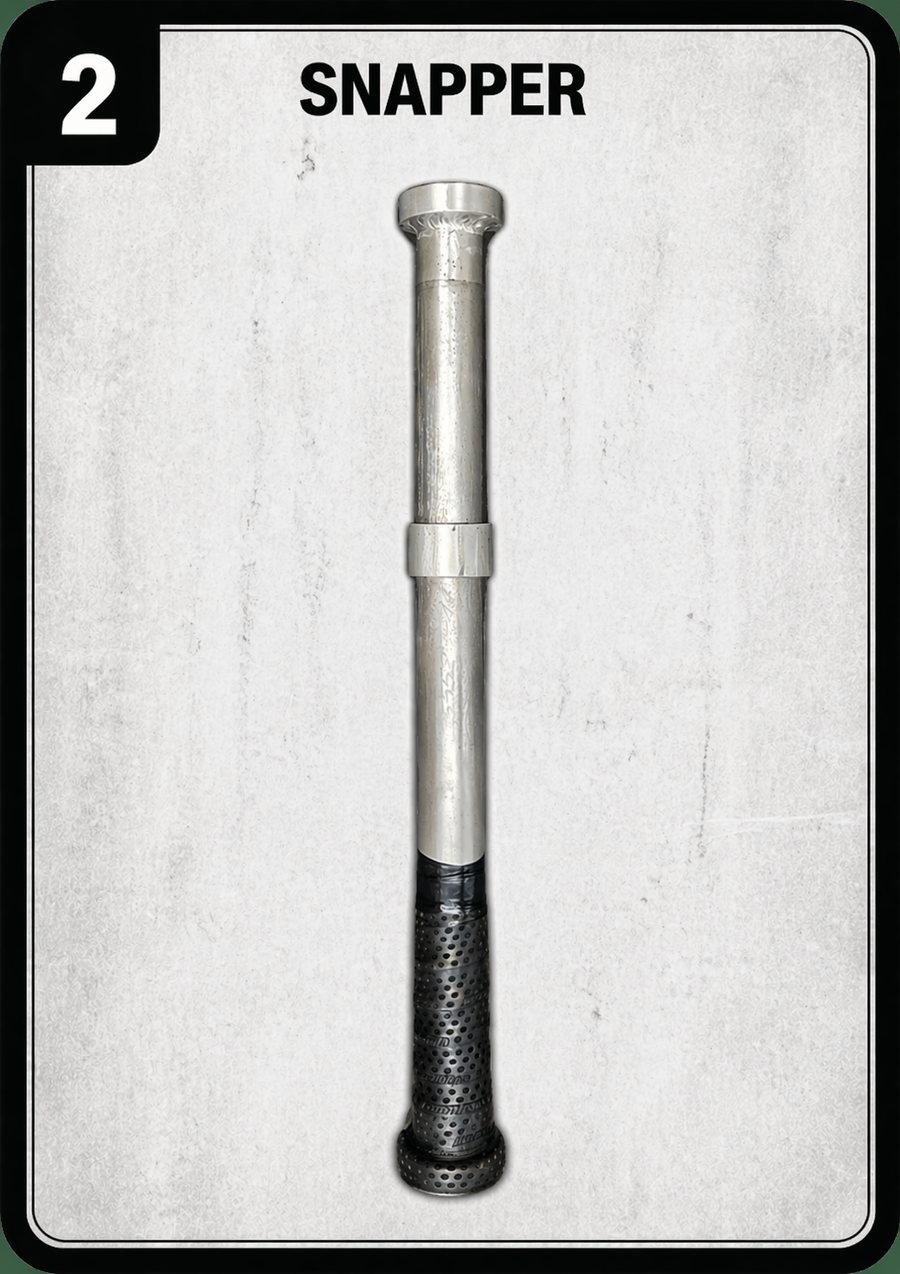
SNAPPER · FEEL-BASED HITTING TRAINER
Your feel is your real.
Hitters don't swing the way they're told to — they swing the way it feels right. Snapper changes what "right" feels like. Every rep teaches a shorter path, a connected turn and a faster barrel, so the swing you want becomes the swing you have.
THE PROBLEM
You can't think your way to a better swing.
A swing takes about a sixth of a second. There's no time to run through cues. The flaws that cost hitters the most are the ones they can't feel — so they keep repeating them, rep after rep.
01
Casting the barrel.
The hands push away from the body early, the barrel swings wide and the swing gets long. Pitchers live off hitters who cast — anything hard and inside wins.
02
Shoulders spin first.
When the upper half starts the swing, the hips never get to do their job. Energy leaks out before it reaches the barrel, and bat speed tops out early.
03
A path that only works one way.
A barrel that rolls over or wraps can only pull the ball. Off-speed away and good velocity both expose it, and the hitter has no answer to the other side of the field.
04
Cues that never reach the swing.
"Stay inside it." "Hands to the ball." Hitters hear it, understand it, and still do the old thing at game speed — because the body learns by feel, not by words.
WHAT SNAPPER CHANGES
From muscled to connected.
Before · Disconnected
- ✗Shoulders spin first
- ✗Hands push away — the barrel casts
- ✗Weight drifts forward early
- ✗Hitter muscles the swing
- ✗Path only works to the pull side
After · Connected
- ✓Hips and middle start the swing
- ✓Hands stay inside, barrel stays short
- ✓Force moves from the ground up
- ✓Hitter finishes balanced and explosive
- ✓Barrel works to all fields
Snapper gives instant feedback on every swing. When the movement is right, it feels smooth and fast. When it isn't, the hitter knows right away — and the body corrects itself without a coach having to say a word.
HOW SNAPPER IMPROVES A HITTER'S SWING
Train the movement. Build the path.
Snapper is built to make the efficient swing the easy one. Its design rewards connection and a short path, and its weight system trains speed — so mechanics and bat speed improve together instead of fighting each other.
Builds bat speed
Overload and underload work with Snapper's sliding weight fires fast-twitch fibers and trains the body to move the barrel faster through the zone.
Shortens the barrel path
Snapper rewards a short, direct path to the ball and punishes a long one. The hitter feels the difference on every rep — no explanation needed.
Creates connection
Hands, hips and barrel have to stay linked through the hitting zone for Snapper to work right. Casting and wrapping show up immediately and get trained out.
Trains opposite-field direction
Driving the barrel through the middle and the other way becomes a feel, not a thought — and that feel transfers into game swings.
Sequences hip to hand
Hips fire first, hands follow. Snapper forces the kinetic chain into the right order so energy from the lower half arrives at the barrel at contact.
Hard-wires it through reps
Consistent feel-based reps turn the right movement into the default one, so it holds up when the hitter stops thinking and starts competing.
15%
Faster barrel speed
1,000+
Athletes using Snapper
4.9/5
Athlete rating
BUILT DIFFERENT
Engineered for the reps that matter.
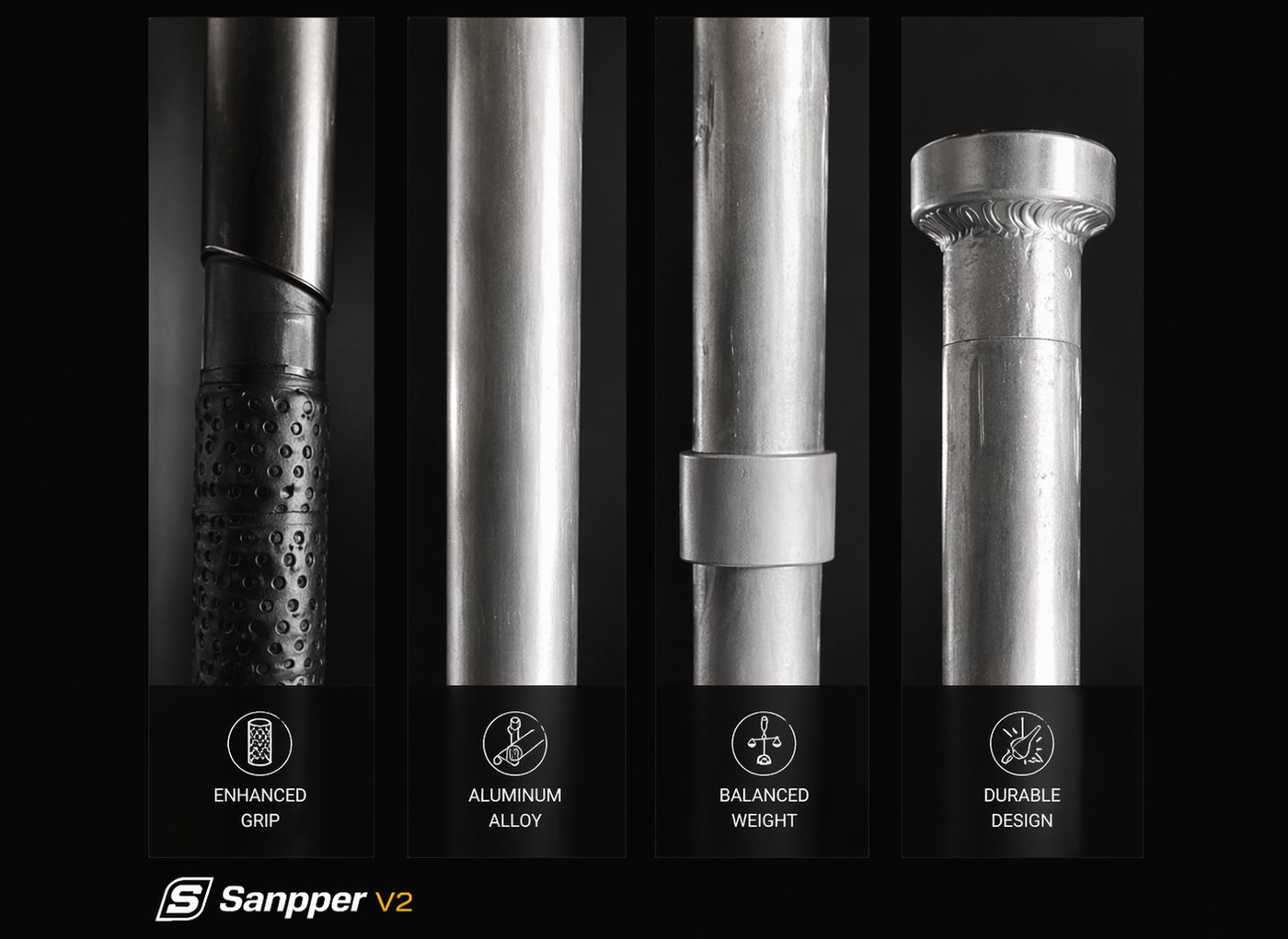
Aluminum alloy construction, an enhanced grip and balanced weight distribution make Snapper durable enough for daily work and precise enough that every rep gives honest feedback.
- —Enhanced grip
- —Aluminum alloy
- —Balanced weight
- —Durable design
THE SNAPPER PROGRESSION
Five drills. One connected swing.
Hitters start with no stride to own the barrel, then add movement until full-speed swings hold the same feel. Every drill is in The Facility's exercise library with sets, reps and coaching cues.
| Step | Drill | What it trains | The feel |
|---|---|---|---|
| 1 | No-Stride Check Swings | Barrel acceleration, connection | Accelerate through contact, then check and hold at the contact zone. |
| 2 | No-Stride Swords | Launch, barrel from behind | Draw the sword — the barrel comes from behind as the trail side drives. |
| 3 | No-Stride Swings | Bat speed, sequencing | Full intent. Hips lead, hands follow, full finish every rep. |
| 4 | Mini-Step Swings | Ground force into rotation | Small stride, big rotation — the step drives the turn. |
| 5 | Back-Step Swings | Maximum bat speed | Step back to load the trail hip deep, then drive the trail side through. |
No-Stride Check Swings
Step 1Barrel acceleration, connection
Accelerate through contact, then check and hold at the contact zone.
No-Stride Swords
Step 2Launch, barrel from behind
Draw the sword — the barrel comes from behind as the trail side drives.
No-Stride Swings
Step 3Bat speed, sequencing
Full intent. Hips lead, hands follow, full finish every rep.
Mini-Step Swings
Step 4Ground force into rotation
Small stride, big rotation — the step drives the turn.
Back-Step Swings
Step 5Maximum bat speed
Step back to load the trail hip deep, then drive the trail side through.
CHOOSE YOUR TOOL
Same feel. Different focus.
Both Snappers train feel. The V2 19" sharpens the hands and the path; the V1 adds the sliding weight for full-swing speed work.
| — | Snapper V2 19" · $129 | Snapper V1 · $149 |
|---|---|---|
| Length | 26" | 30" |
| Focus | Hand path, connection, direction | Full-swing sequencing and speed |
| Training style | One-hand and two-hand drill work | Overload / underload with sliding weight |
| Best for | All ages — youth to pro | Advanced hitters |
| Improves | Time to Impact, Rotational Speed, Bat Speed | Time to Impact, Rotational Speed, Bat Speed |
Not sure which one? Start with the V2 19" — it works for every age and level and covers the fundamentals every swing is built on.
Change the feel. Change the swing.
Get a Snapper and start building a shorter, faster, more connected swing today.
Shop Snapper at The FacilitySnapper V2 19" $129 · Snapper V1 $149